
Recovering from an injury, surgery, or foot condition can make everyday activities feel difficult. Simple movements such as walking to the kitchen, climbing stairs, or stepping outside may suddenly require extra care. During these times, supportive mobility aids can play an important role in helping people stay active while protecting the healing body.
Two commonly recommended aids during recovery are Forearm Crutches and a post op shoe. Each serves a different purpose but often works together to support safe movement, reduce pressure on injured areas, and encourage gradual healing.
This guide explains how these devices work, when they are typically used, and how to adjust to daily life while using them.
Understanding the Challenges of Limited Mobility
When a leg, ankle, or foot is injured, the body naturally tries to avoid placing weight on the affected area. However, avoiding movement completely can create other issues, such as muscle stiffness, reduced circulation, and slower recovery.
Medical professionals often recommend controlled movement instead. With the right support, people can maintain balance, move safely, and prevent additional strain on injured tissues.
Mobility aids like Forearm Crutches and a post op shoe are designed to make this controlled movement possible.
What Are Forearm Crutches?
Forearm Crutches are mobility aids designed to help people walk when one or both legs cannot fully support body weight. Unlike traditional underarm crutches, these crutches feature a cuff that wraps around the forearm and a handle that the user grips.
This design allows the arms and upper body to share the load while the legs recover.
Key Characteristics
A cuff that supports the forearm
Adjustable height for proper posture
Rubber tips for traction on the ground
Lightweight but strong materials
Because of the forearm cuff, users often find them easier to control during longer periods of walking compared to standard crutches.
When Are Forearm Crutches Commonly Used?
Doctors and physiotherapists may suggest Forearm Crutches in several situations, including:
Foot or ankle surgery recovery
Leg fractures or sprains
Long-term mobility conditions
Rehabilitation after orthopedic procedures
They are also frequently recommended for individuals who need support for several weeks or months, as the design encourages a more natural walking rhythm.
What Is a Post Op Shoe?
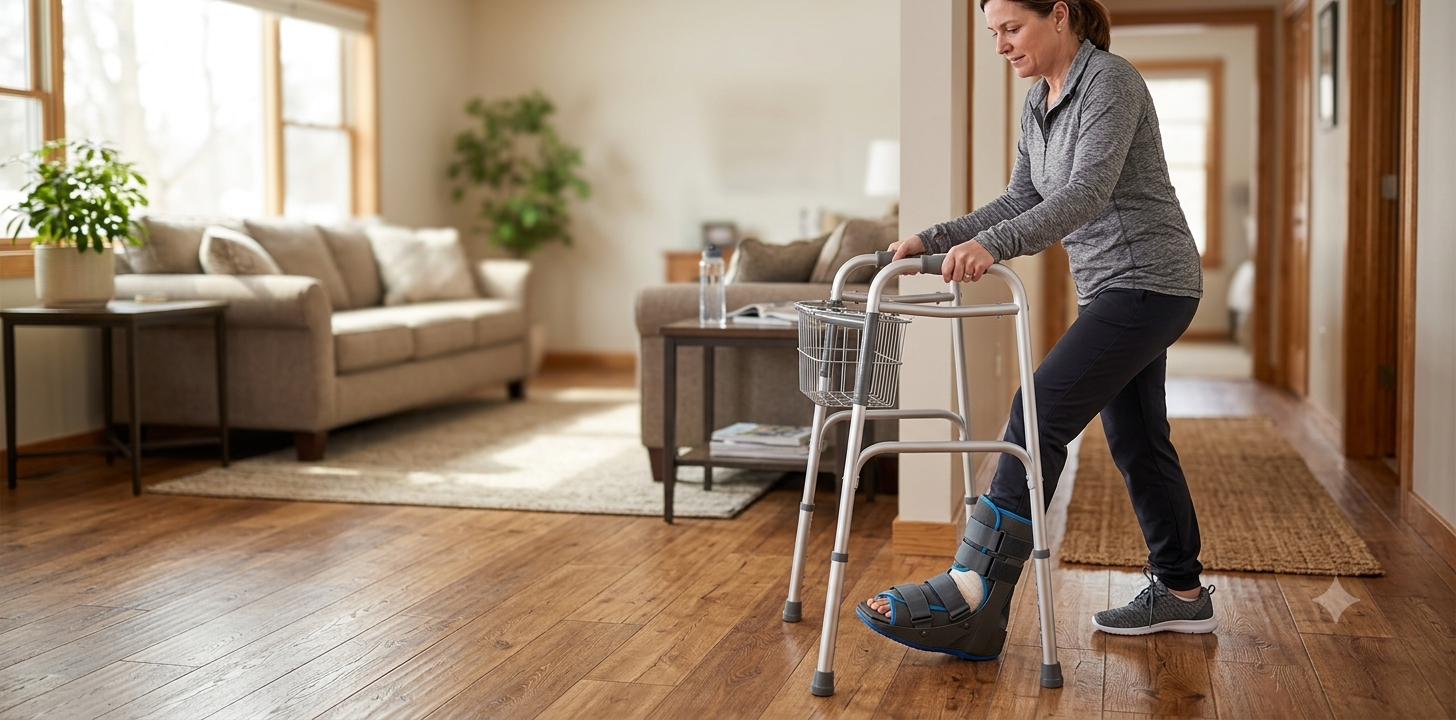
A post op shoe is a protective medical shoe commonly worn after foot or toe surgery. It is designed to reduce pressure on sensitive areas while allowing the wearer to walk carefully.
Unlike regular shoes, a post op shoe usually has a rigid sole and an open design. This helps stabilize the foot and prevent unnecessary bending.
Common Features
Hard or semi-rigid sole
Adjustable straps for swelling
Wide and open front
Lightweight construction
These features help protect surgical sites, bandages, or healing bones.
Situations Where a Post Op Shoe Is Recommended
A post op shoe may be used in a variety of recovery situations, including:
After bunion surgery
Following toe fractures
After minor foot surgeries
When bandages or dressings need protection
The goal is not only to shield the foot but also to keep it in a stable position while walking.
How Forearm Crutches and a Post Op Shoe Work Together
When someone is recovering from foot surgery or injury, doctors sometimes recommend using both Forearm Crutches and a post op shoe.
This combination offers two important benefits:
1. Reduced Weight on the Foot
The crutches allow the arms to carry part of the body weight, while the shoe protects the healing area.
2. Improved Balance
The rigid sole of the post op shoe stabilizes the foot, while the crutches help maintain balance during movement.
Together, these aids allow individuals to stay mobile without placing too much pressure on the injured area.
Adjusting to Daily Life While Using Mobility Aids
Using mobility aids can feel unfamiliar at first, but most people adapt within a few days. Small adjustments in daily routines can make the transition easier.
Move Slowly and Carefully
Rushing increases the risk of losing balance. Taking slower, controlled steps can make movement safer.
Keep Pathways Clear
Removing obstacles such as loose rugs or clutter can reduce the chance of tripping.
Use Handrails When Possible
When climbing stairs, handrails can provide extra stability along with the crutches.
Wear Comfortable Clothing
Loose clothing allows easier movement and prevents fabric from getting caught on crutches.
Tips for Using Forearm Crutches Safely
Learning proper technique is important to prevent strain on the arms or shoulders.
Maintain upright posture.
Avoid leaning forward too much while walking.
Place the crutches slightly ahead.
This helps maintain balance before stepping forward.
Distribute weight evenly.
Both arms should share the load rather than relying heavily on one side.
Take breaks when needed.
Extended use may cause arm fatigue, especially in the early days of recovery.
Caring for Your Post Op Shoe
Proper care helps keep the shoe supportive and hygienic during recovery.
Keep the sole clean.
Wipe off dirt to maintain traction.
Check straps regularly.
Ensure they remain secure but not overly tight.
Allow ventilation.
If possible, remove the shoe while resting to let the foot breathe.
Follow medical instructions.
Always follow guidance from healthcare providers regarding when to wear the shoe.
Supporting Recovery Beyond Mobility Aids
While aids like Forearm Crutches and a post op shoe provide physical support, recovery also depends on other factors.
Follow Medical Advice
Healthcare providers may recommend exercises, rest periods, or specific walking techniques.
Monitor Pain or Swelling
Unexpected discomfort or swelling should be reported to a medical professional.
Gradually Increase Activity
As healing progresses, mobility usually improves. Activity levels should increase gradually rather than all at once.
These steps help ensure that mobility aids assist recovery instead of delaying it.
Recovery Is a Process
Healing from surgery or injury takes time, patience, and the right support. Mobility aids are not simply tools for walking; they are part of a larger recovery process that helps people maintain independence while protecting the body.
For many individuals, using Forearm Crutches alongside a post op shoe can make everyday movement safer and more manageable during this period.
With proper use, guidance from healthcare professionals, and gradual progress, most people are able to return to their normal routines step by step.
Bodyassist focuses on practical support solutions that help people manage recovery and everyday mobility challenges.
Frequently Asked Questions (FAQs)
1. What is the main difference between forearm crutches and underarm crutches?
Forearm crutches use a cuff around the forearm and a hand grip for support, while underarm crutches rest beneath the armpits. Forearm crutches often allow more controlled movement and are commonly used for longer-term mobility support.
2. How long should a post op shoe be worn after surgery?
The length of time varies depending on the type of surgery and healing progress. Some people may wear it for a few weeks, while others may need it longer. A healthcare professional should determine the appropriate duration.
3. Can you walk normally while wearing a post op shoe?
Walking is usually possible, but the movement may feel different due to the rigid sole and protective design. Most people walk more slowly and carefully during recovery.
4. Are forearm crutches difficult to learn?
They may feel unfamiliar at first, but most people adapt quickly with proper instruction. A physiotherapist can demonstrate safe techniques for walking and balance.
5. Do forearm crutches reduce pressure on the injured foot?
Yes. They help distribute body weight through the arms and upper body, which reduces the amount of pressure placed on the injured leg or foot.


Write a comment ...